
A Minnesota winter is hard on the outside of a house. Snow loads, ice dams, freeze-thaw cycles, and road salt all work on the roof, gutters, siding, windows, and decks for months, and most of the damage starts small enough to miss. A loose piece of flashing or a gap in the caulk does not look like much in April. It can look like a stained ceiling or rotted trim by August.
The fix is a simple walkthrough. Most homeowners can do the first pass from the ground in under an hour, and it tells you whether you need a professional look or just an afternoon with a caulk gun. The same walk is worth repeating in fall, before the snow.
- Roof and Flashing
- Gutters and Drainage
- Siding and Exterior Trim
- Windows and Doors
- Decks, Railings, and Exterior Stairs
- When to Call a Professional
Roof and Flashing
Start at the roof, because it does the hardest work over winter and a leak there damages everything below it. Look from the ground, ideally with binoculars, and stay off the roof itself. A wet or icy roof is dangerous, and a homeowner's footsteps can do more harm than good.
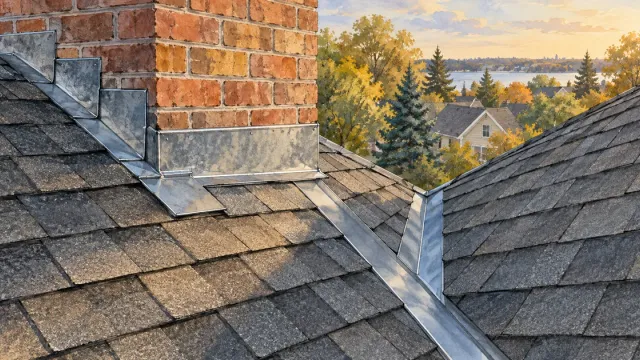
Look for shingles that are missing, lifted, or curled, and for flashing that is bent or pulling away around chimneys, vents, and valleys. Check the roof edge for ice dam marks, which show up as staining or damp streaks along the eaves and under the overhang. Ice dams form when heat escaping into the attic melts snow that then refreezes at the colder edge, and the water that backs up under shingles is a common source of ceiling leaks. The University of Minnesota Extension has a good explanation of how ice dams form and how to prevent them, and our own guide to preventing ice dams on a Minnesota roof covers the attic side.
Also check the attic or top-floor ceilings for stains. If you see ice dam marks outside and a stain inside, that is a roofing and insulation question, not a cosmetic one. A ventilation problem can cause the same pattern, so how to tell if your roof is properly ventilated is worth a read. If you find damage, our roofing team can confirm what is cosmetic and what needs repair.
Gutters and Drainage
The first sign to look for is any gutter that has pulled away from the house. Gutters move water off the roofline and away from the foundation, and the weight of ice and snow shifts them more than people expect.
Walk the whole run. Look for sagging sections, loose fasteners, and downspouts that have come disconnected. Overflow marks or staining on the fascia mean water is going over the edge instead of through the system, often because of clogged gutters or a changed pitch.
Then look at where the water ends up. Downspouts should discharge well away from the foundation, and the soil near the house should slope away from it. In the clay soils common across the South Metro, water that sits against a foundation is slow to drain and can find its way into a basement. A small adjustment here is far cheaper than dealing with a wet basement later.
Siding and Exterior Trim
Siding and trim are the house's rain jacket. Temperature swings and wind loosen boards and open small gaps, and once moisture gets behind the siding it can reach sheathing and framing without any visible sign.
Walk the perimeter and look for cracked or warped siding, separated caulk joints, loose trim, and paint that is peeling or bubbling. Bubbling paint often means moisture is getting behind it. Check the lower courses of siding and the trim near the ground, where snow piles up and stays wet.
Two cautions for older homes. If the house was built before 1978 and you plan to sand or scrape peeling paint, lead paint rules apply, and the EPA explains what lead-safe renovation requires. And if your siding is an older cement-based product, do not cut or break it before reading about asbestos siding in Minnesota homes. When in doubt, look first and ask before you touch.
Windows and Doors
Windows and doors expand and contract all winter, so the seals around them are one of the first things to fail. By spring, you may notice drafts that were not there in the fall, gaps in the exterior caulk, trim pulling away from the frame, or small water stains on the sill or casing.
Run a hand around each frame on a windy day and look closely at the corners and the bottom edge, where water collects. Fresh caulk or weatherstripping often solves the problem and helps with comfort and energy use. If a frame is soft when you press on it, the wood is rotting, and sealing over it only hides the problem. At that point, it is worth knowing your options for window and siding repair before the damage spreads to the wall.
Take photos as you go and date them. A set of before-and-after pictures makes it easier to tell a new problem from an old one next year, and it helps a contractor or insurance adjuster see what changed.
Decks, Railings, and Exterior Stairs
Decks and stairs take the worst of winter. Snow, ice, and road salt wear on exposed wood and fasteners, and standing water speeds up rot.
Check that railings are solid by pushing on them. Look for soft or splintering boards, rusted screws or brackets, and places where water pools instead of draining. Pay extra attention to where the ledger board meets the house and to the posts at the base, since those are the connections that matter most for safety. Exterior stairs deserve the same check, because a loose tread or railing is an injury waiting to happen.
If the deck is more than a few years old and has never been looked at closely, a spring check is also a good time to decide whether it needs cleaning and sealing or something bigger. Our post on what to know before starting a deck project this spring walks through that decision, and our decks and exteriors page shows what the larger projects involve.
When to Call a Professional
Most of what you find in a walkthrough is a small, cheap fix. A few findings are worth a professional's eyes before the next storm: any suspected roof leak or damaged flashing, ceiling stains, soft or rotted wood at a window or deck connection, siding that is damaged over a large area, and anything on an older home that might involve lead paint or asbestos.
The point of the walkthrough is to find problems while they are still small. A homeowner in Eden Prairie or anywhere else in the South Metro who spends an hour in April is usually trading a few dollars of caulk for a much larger repair bill later, and that is the trade this whole routine is built on.
If you notice something that does not look right and you are not sure how serious it is, we are happy to take a look and talk through next steps. Contact us and we will help you sort out what can wait and what cannot.