
Basement Remodeling
That forgotten stone-walled root cellar under your Twin Cities home is already halfway to a world-class wine cellar — it just needs the right infrastructure to get there.
There’s something quietly remarkable about opening a door in your historic Twin Cities home and finding a root cellar. Stone walls. A dirt floor. Maybe an old wooden shelf and the faint smell of earth and time. Most homeowners look at it and see a problem—damp, dark, and vaguely uninviting.
What they’re actually looking at is infrastructure. And with the right remodeling approach, that forgotten subterranean space can become one of the most distinctive rooms in the house—a climate-controlled wine cellar, a walk-in cold pantry for garden harvests, or a tasting room that guests actually want to spend time in.
Root cellar conversion is one of the more specialized projects in basement remodeling. It rewards careful planning and penalizes shortcuts. This guide walks through exactly what’s involved—and what’s possible.
The reason root cellars worked for generations is the same reason they make excellent candidates for wine and cold storage today: the earth is a natural thermal mass.
Below the frost line—roughly four to six feet down in Minnesota—soil temperature stays relatively constant year-round, hovering between 50°F and 60°F. That’s close to ideal for wine aging and naturally cool for food storage. Your basement’s existing subterranean location does the heavy lifting that mechanical systems would otherwise have to work against.
The challenge isn’t temperature—it’s control. Minnesota’s climate swings from brutal humidity in summer to bone-dry cold in winter. An unimproved root cellar absorbs all of that variation. Exposed dirt floors off-gas moisture. Stone foundation walls wick groundwater. Without intervention, you get mold, cork rot, and spoiled preserves—the opposite of what you’re trying to protect.
The goal of a root cellar conversion is to harness the natural thermal advantage while sealing out the variables that damage what’s stored inside.
Before any racking goes in or lighting gets planned, three infrastructure elements have to be addressed. Skip any of them and the finished room will work against you.
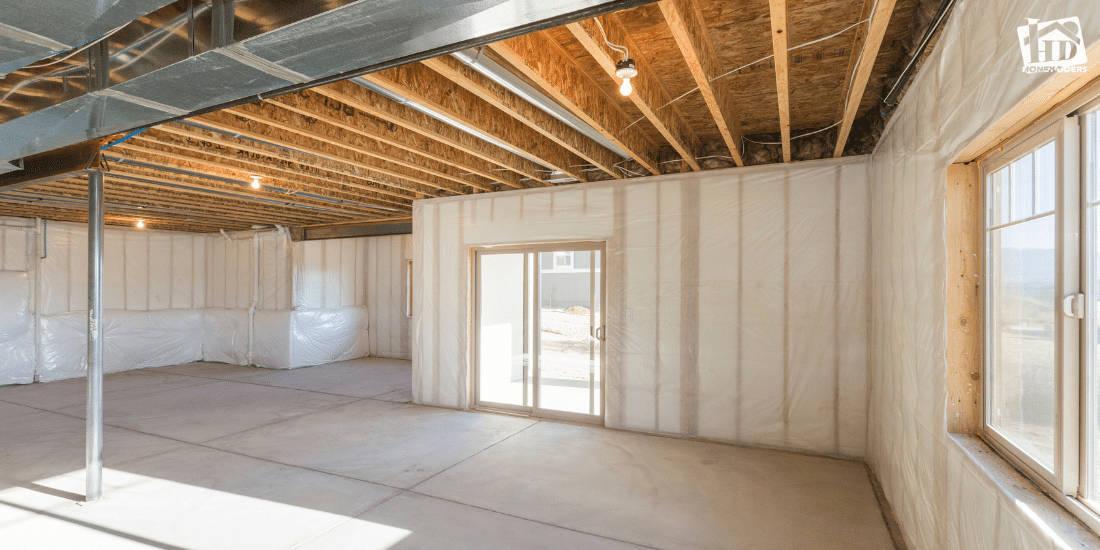
Standard fiberglass batt insulation doesn’t belong in a below-grade space with humidity exposure. It absorbs moisture, loses R-value, and becomes a mold substrate.
Closed-cell spray foam is the right material here. It creates a vapor barrier and an insulating layer in one application, bonding directly to stone or concrete foundation walls. It also adds modest structural reinforcement to older masonry. For wine storage, you’re targeting R-20 to R-30 on walls and ceiling to maintain stable interior temperatures without overworking your cooling unit.
A dirt floor needs to go. A poured concrete slab with an embedded vapor barrier stops ground moisture from entering the room entirely. Existing stone or block foundation walls should be inspected for active water intrusion before insulation goes on—any cracks or weeping mortar joints need to be addressed at the foundation level first, not covered over.
Even a well-sealed room will need mechanical humidity control in Minnesota. For wine storage, the target range is 50–70% relative humidity. Too dry and corks shrink, exposing wine to oxidation. Too wet and labels deteriorate and mold colonizes racking.
A dedicated through-wall cooling unit designed for wine cellars handles both temperature and humidity simultaneously. These are not the same as standard mini-splits or window AC units, which dry the air aggressively—exactly what you don’t want.

With infrastructure handled, the design possibilities open up considerably. Here are four approaches that work well in converted Minnesota root cellars.
The cooling unit is the functional heart of a wine cellar. Residential wine refrigerators—the kind that sit on a countertop or under a bar—aren’t designed for room-sized applications. A dedicated through-wall or ducted cooling system engineered for cellar use holds temperature within one or two degrees year-round, manages humidity actively, and runs quietly enough for a finished space.
Sizing depends on room volume, insulation R-value, and how much heat the lighting produces. A professional load calculation before purchase prevents the common mistake of buying an undersized unit that runs continuously and fails early.
Why It Works:
Ideal For: Anyone building a serious wine collection or storing temperature-sensitive items like cheese, charcuterie, or specialty produce.
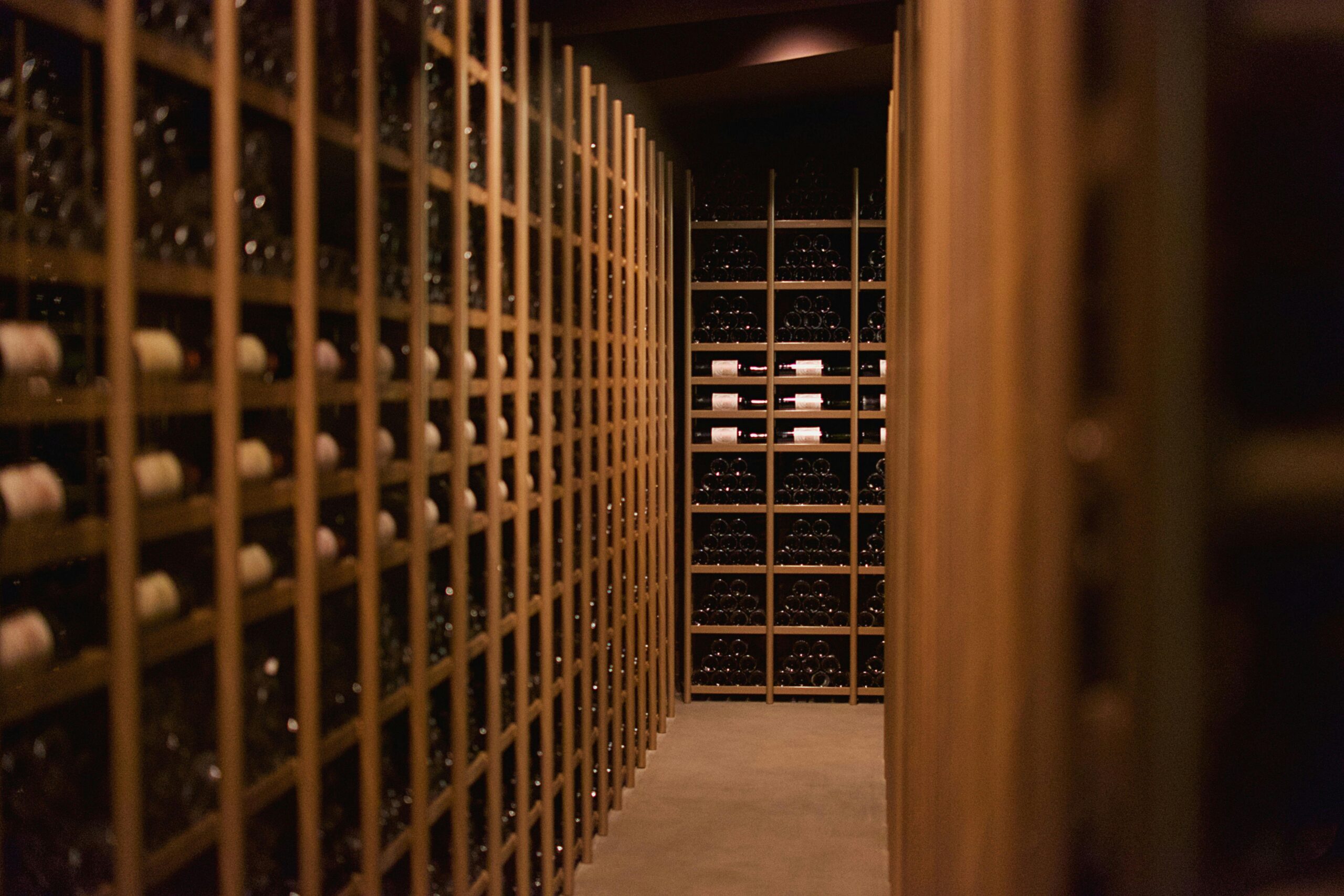
Wood species matters in a high-humidity environment. Mahogany and aromatic cedar are the traditional choices for wine racking because both are naturally resistant to moisture, warping, and mold. They also age well—developing patina rather than deteriorating.
Custom racking lets you design around the room’s actual geometry, which in a converted root cellar is rarely a clean rectangle. Angled walls, low ceiling sections near foundation footings, and existing structural columns can all be incorporated into a racking layout rather than worked around. A well-designed system turns the room’s quirks into character.
Why It Works:
Ideal For: Homeowners with an existing collection who want storage that’s both functional and worth showing off.
Not every converted root cellar needs to be purely a wine room. Many Minnesota homeowners want to preserve the original function—cold storage for garden harvests, canned goods, and root vegetables—while adding a dedicated wine aging section. A dual-zone layout handles both.
The key is thermal separation. Wine aging wants 55°F and 60–70% humidity. Harvest cold storage wants 32–40°F and higher humidity still. These zones need to be physically divided—typically with an insulated partition wall and separate cooling—rather than managed by a single unit trying to split the difference.
A well-designed dual-zone cellar is a practical asset for Minnesota homeowners who grow their own produce or buy in bulk from local farms. It’s also increasingly relevant as interest in food preservation and home pantry capacity has grown.
Why It Works:
Ideal For: Homeowners who want to honor the root cellar’s original purpose while upgrading it for a modern lifestyle.

A root cellar conversion lives or dies on what’s behind the walls. Use this checklist before finalizing any design decisions.
Foundation and Waterproofing
Insulation and Air Sealing
Electrical
Mechanical
Permitting
A root cellar is one of the rare features in an older Minneapolis home that’s already doing something useful—it just needs the right team to finish the job. The infrastructure work is exacting. The design possibilities are genuinely exciting. And the finished result is a room that most homes simply don’t have.
At Honey-Doers, basement remodeling is one of our core specialties—and root cellar conversions are exactly the kind of project where craft and technical knowledge have to work together. We’ve helped Minneapolis homeowners turn forgotten spaces into rooms worth planning around.
Browse our project gallery to see what’s possible, or contact us to schedule a free consultation. Let’s find out what your root cellar is actually worth.
Honey-Doers
Minneapolis–area home remodeling and handyman services trusted for 27+ years. We write to help homeowners make confident decisions about their homes.
Our team is ready to transform your home. Let's start with a free consultation — no pressure, no obligation.
Reviews: 134