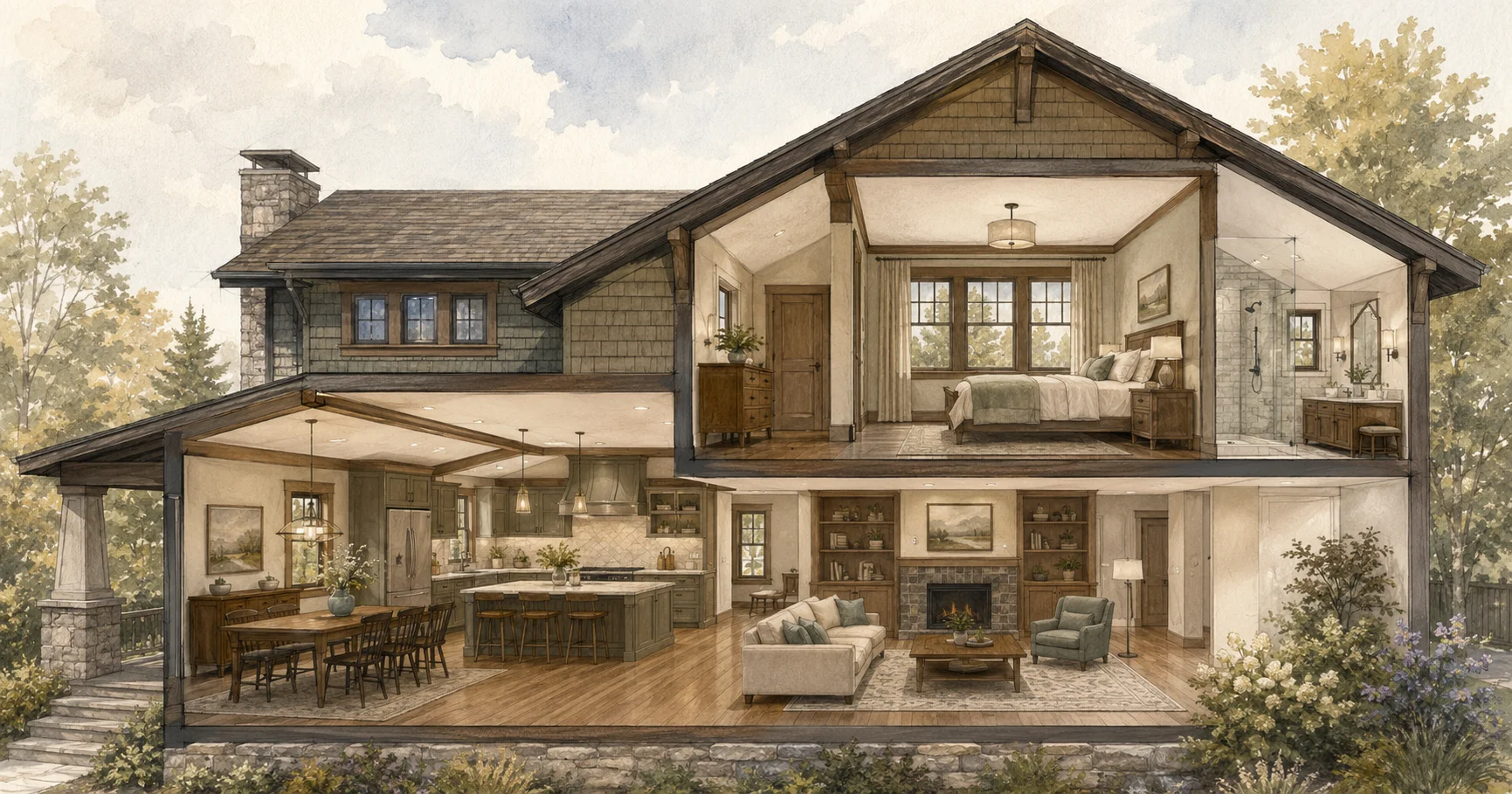
If you're thinking about updating several rooms at once, the difference between a smart investment and a stressful project usually comes down to planning. A strong whole home renovation checklist helps you make decisions in the right order, protect your budget, and avoid the kind of mid-project surprises that slow everything down.
A full-home remodel is not just a bigger version of a kitchen or bathroom update. It involves more moving parts, more sequencing, and more choices that affect one another. Flooring decisions can affect trim work. Wall changes can affect electrical and HVAC. A beautiful design plan can still create headaches if storage, traffic flow, or daily routines are not considered early.
That is why the most useful checklist starts before finishes and fixtures. It begins with how you live in the home now, what is not working, and what needs to change for the renovation to feel worthwhile five or ten years from now. A whole-home remodeling partner who has run this sequence before can keep each of the steps below from colliding with one another.
- Start Your Whole Home Renovation Checklist with Clear Goals
- Define the Full Scope Before Work Begins
- Set a Realistic Budget with a Contingency
- Build the Right Team Early
- Prioritize Layout, Systems, and Structure Before Finishes
- Make Selections Early and Keep Them Organized
- Plan for Permits, Schedule, and Living Arrangements
- Prepare for the Decisions That Happen Mid-Project
- Final Whole Home Renovation Checklist Items Before Construction Starts
Start your whole home renovation checklist with clear goals
Before you talk about tile, paint, or cabinet styles, define what success looks like. Some homeowners want to modernize an older home while keeping its character. Others need better function for a growing family, aging in place, or more usable space for work and entertaining. Those goals lead to different renovation priorities.
Write down what is driving the project. Maybe the kitchen is closed off, the bathrooms feel dated, the basement sits unfinished, or storage is limited throughout the house. Separate must-haves from nice-to-haves. That distinction matters when pricing comes in and trade-offs need to be made.
This is also the stage to decide whether you are renovating for long-term living, preparing for resale, or trying to do both. If you plan to stay, comfort and daily function may matter more than broad market trends. If resale is part of the equation, it helps to focus on improvements that appeal to future buyers without overbuilding for the neighborhood. The annual Cost vs. Value report is a useful benchmark for understanding which projects return the most in your region.
Define the full scope before work begins
One of the most common causes of budget creep is incomplete scope. Homeowners start with a kitchen remodel, then realize the adjoining flooring should also be replaced, then notice the trim no longer matches, and then decide the powder room should be updated too. None of those choices are wrong, but they are easier and usually more cost-effective when planned together from the start.
Walk through the entire home and document every area you want addressed. Include structural changes, layout adjustments, cosmetic updates, storage improvements, lighting, flooring, doors, trim, windows, and mechanical needs. Think beyond the obvious rooms. Laundry areas, mudrooms, closets, stair railings, and entryways often affect how the home feels as much as major spaces do.
A good whole home renovation checklist should also identify what will stay untouched. That creates boundaries and helps your contractor build a more accurate plan. Clarity upfront supports better communication later.
Set a realistic budget with a contingency
A renovation budget should do more than cover materials and labor. It should account for design decisions, permit costs, temporary living adjustments if needed, and a contingency for conditions that are hidden until walls or floors are opened. In older homes especially, surprises can include outdated wiring, plumbing issues, water damage, or framing that needs correction.
The right budget is not always the lowest one. It is the one that matches the scope, the quality level you expect, and the condition of the home. If you want custom cabinetry, durable flooring, tile work, and layout changes across multiple rooms, your budget needs to support that level of craftsmanship.
A contingency of 10 to 20 percent is often wise, depending on the age of the home and the complexity of the work. That does not mean you will spend it all. It means you are planning responsibly, so one unexpected issue does not force rushed decisions or lower-quality substitutions.
Build the right team early
For a project of this size, experience matters. A whole-home renovation requires coordination across design, demolition, carpentry, electrical, plumbing, flooring, painting, and finish work. It helps to work with a licensed and insured remodeling partner that can manage the big picture while keeping communication clear.
Early conversations should cover process, timeline expectations, cost ranges, who manages subcontractors, and how change orders are handled. Knowing the right questions to ask your contractor before work begins can save significant time and misunderstanding later. A team that communicates clearly, respects your home, and addresses issues directly can make a complex project feel much more manageable.
This is where local experience also helps. In the Twin Cities area, seasonal timing, permit requirements, and older housing stock can all shape project planning. An established contractor will understand those variables and help you make informed decisions before they become delays.
Prioritize layout, systems, and structure before finishes
Foundational decisions — moving walls, relocating plumbing, upgrading electrical service — need to be locked in before any finish is selected, not after. It is natural to get excited about countertops, fixtures, and paint colors, but the smartest renovation plans handle those structural and systems questions first.
Think through circulation and use patterns. Does the kitchen connect well to dining and living areas? Is there enough lighting where tasks happen? Are bathrooms laid out for comfort and storage? Does the basement support the way your family actually uses it? Good remodeling is not only about appearance. It is about how the home works every day.
This is also the time to assess insulation, ventilation, and windows. If certain rooms are always too hot, too cold, or too dark, a renovation is a good opportunity to fix the underlying issue rather than just improve the surface. In Minnesota, replacing enough of a home's systems in one project — windows, insulation, HVAC — can trigger current state energy code requirements that would not apply to a single-room update, so it is worth confirming with your contractor early whether your scope crosses that line.
Make selections early and keep them organized
Material delays can disrupt even the best-planned schedule. Cabinets, windows, specialty tile, plumbing fixtures, and custom items often have lead times that are longer than homeowners expect. Choosing these items early helps protect the timeline.
Keep all selections documented in one place, including product names, colors, dimensions, and approval dates. That level of organization reduces confusion and helps everyone work from the same information. It also makes substitutions easier if a product becomes unavailable.
Be honest about where quality matters most. In high-use areas, durable materials usually pay off. In lower-impact spaces, there may be opportunities to control costs without sacrificing the overall look. This is where an experienced remodeling team can help you balance investment and value.
Plan for permits, schedule, and living arrangements
Whether you stay in the home during construction or move out for part of the project depends on scope, and it is worth deciding early rather than mid-build. If kitchens, bathrooms, flooring, and major systems are all being addressed at once, living elsewhere may reduce stress and allow work to move faster.
Ask for a realistic schedule, not an overly optimistic one. Construction timelines depend on inspections, product availability, and the discovery of existing conditions once demolition begins. The goal is not perfection. The goal is clear expectations and steady progress.
Permits should never be treated as optional. They protect homeowners by ensuring work meets code and is properly reviewed. Skipping them may seem faster in the short term, but it can create expensive problems when selling, refinancing, or addressing insurance claims. In Twin Cities homes built before 1978, federal lead paint renovation rules also apply — certified contractors are required when disturbing painted surfaces, so this is worth confirming before any demo begins.
Prepare for the decisions that happen mid-project
Even with careful planning, a full-home remodel will involve real-time decisions. A framing issue may change a design detail. A discontinued product may require a new selection. A hidden plumbing problem may shift budget priorities.
What matters is having a process for those moments. Know who will communicate updates, how pricing changes will be approved, and how schedule impacts will be explained. Clear communication builds trust and helps homeowners feel in control, even when the project evolves.
That people-first approach is one reason many Twin Cities homeowners look for a remodeling partner rather than simply a bid. A team like Honey-Doers can help guide not just the construction work, but the decision-making that keeps the project on track with no hidden costs, no surprises.
Final whole home renovation checklist items before construction starts
Before demolition begins, confirm that your goals, scope, budget, selections, permits, and timeline are aligned. Make sure there is a written plan for site access, debris control, parking, working hours, and protection for finished areas that will remain. If you are staying in the home, discuss dust control, utility interruptions, and which spaces will stay functional during each phase.
It is also wise to pack and label belongings well ahead of time. Renovation moves quickly once it begins, and a little preparation can make the first few weeks far easier.
A whole-home remodel is a major investment, but it can also be the turning point that makes your house feel right again. The best checklist does more than keep tasks in order. It gives you a clearer path, better conversations, and the confidence to move forward with a plan that fits your home and your life.