Cottage core as a design philosophy has outlasted its moment as a social media trend. What started as an aesthetic shorthand for romanticized rural life has settled into something more durable: a set of design values centered on natural materials, handmade craftsmanship, warm textures, and a genuine connection to the outdoors. For Minnesota homeowners, those values translate particularly well. The state's landscapes, older home stock, and tradition of local craft give the aesthetic a regional grounding that makes it feel native rather than imported.
This is not a style that requires a complete renovation. Cottage core elements can be layered into an existing home through material choices, furniture selection, and the way natural light and greenery are treated. But for homeowners who are remodeling, it offers a clear design direction — one that tends to age well and feel more personal than trends built around novelty.
What Cottage Core Actually Means
The term can be misleading. Cottage core is not strictly about small houses, English gardens, or period-accurate farmhouse decor. At its core — so to speak — it is about preferring the made-over-the-manufactured. It values imperfection: the grain variation in solid wood, the slight irregularities in handthrown pottery, the softness of linen that has been washed many times. It values things that show their age honestly rather than things that try to hide it.
In practical design terms, that means favoring natural materials over synthetic ones, choosing furniture with provenance over flat-pack pieces, and layering textiles and objects in a way that feels accumulated rather than curated. According to Architectural Digest, the staying power of this aesthetic comes from its emphasis on comfort and authenticity over trend-chasing — which is exactly why it translates well to long-term home design decisions rather than seasonal decorating.
The Minnesota fit is intuitive. Homes built before 1970 often have the bones that cottage core works with naturally: wood floors, plaster walls, smaller rooms with defined functions, windows that frame rather than dominate. Newer homes can achieve the same feeling through finish choices and furnishings, but older Twin Cities neighborhoods — South Minneapolis bungalows, St. Paul Victorians, lake cabins throughout greater Minnesota — already have the architecture.
Materials and Furniture
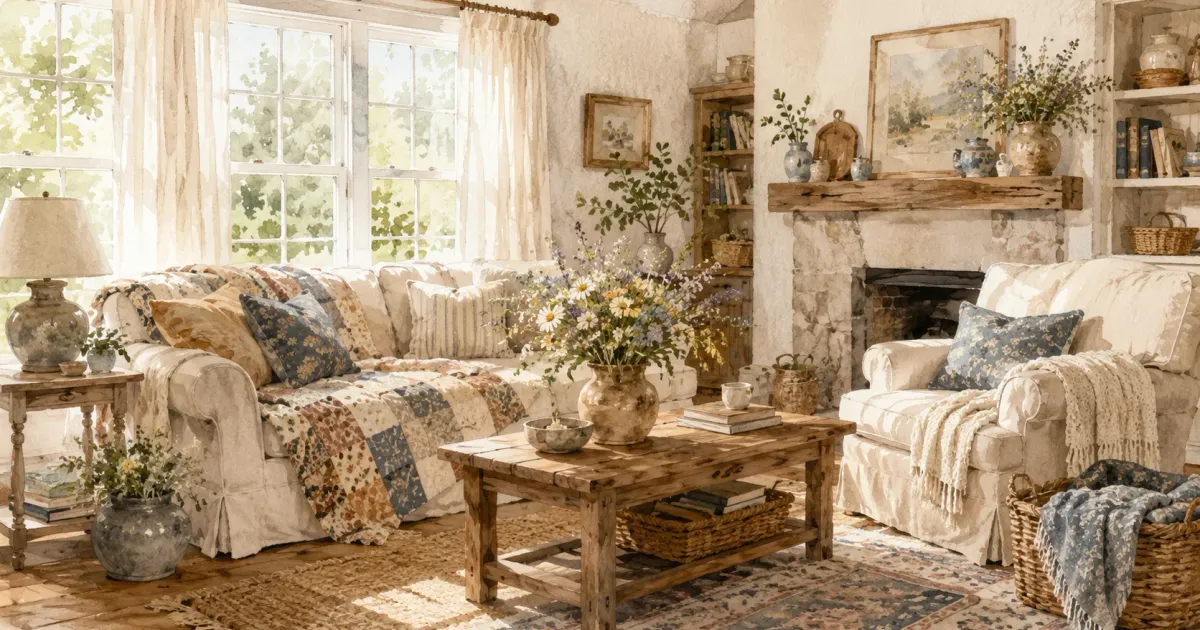
The material choices are where cottage core becomes a remodeling direction rather than just a decorating style. Solid wood — particularly aged, reclaimed, or locally sourced oak, maple, and pine — is central. It shows up in dining tables, cabinet faces, ceiling beams, open shelving, and flooring. The preference is for wood that reads as wood: visible grain, natural variation, a finish that enhances rather than conceals. This connects directly to the broader shift toward natural materials in kitchen and home design that has reshaped remodeling preferences over the past several years.
Antique and vintage furniture pieces anchor a room in a way that new furniture rarely can. A sturdy dining table with decades of use, an heirloom cabinet with original hardware, or a reclaimed wood coffee table bring scale, character, and visual weight that synthetic materials do not replicate. Minnesota has a strong market for this — estate sales, antique cooperatives, and local craftspeople working with reclaimed timber give homeowners access to pieces with genuine regional history.
Stone and ceramic surfaces round out the material palette. A stone fireplace surround, fieldstone accent wall, or ceramic tile backsplash adds the tactile depth that makes a cottage core interior feel layered rather than flat. Cast iron cookware displayed on open shelving, stoneware dishes, and copper accents in a kitchen all contribute to the same effect without requiring structural changes.
Textiles and Layers
Textiles do more work in a cottage core interior than in most other design styles. Patchwork quilts, linen slipcovers, woven throws, and curtains in natural fibers — cotton, linen, wool — bring warmth and softness that hard surfaces cannot. The layering of textiles is part of what gives the style its lived-in quality: a quilt folded over the arm of a sofa, linen curtains that puddle slightly at the floor, a wool rug over wood floors.
For Minnesota homeowners, the regional connection runs through motifs and craft traditions. Textiles that incorporate loon, white-tailed deer, or northern star patterns reference the state's wildlife and folk art traditions without being kitschy. Handwoven pieces from Minnesota artisans — there is a strong fiber arts community in the Twin Cities and greater Minnesota — bring authenticity that mass-produced alternatives do not.
The key is restraint in pattern mixing. Cottage core layering works when the base palette is relatively neutral — creams, warm whites, soft grays, muted blues and greens — and pattern is introduced through individual pieces rather than applied to every surface simultaneously.
Light, Greenery, and the Outdoors
Cottage core interiors make the most of natural light, and Minnesota's seasonal light variation gives that priority real meaning. South-facing windows that bring in winter sun, deep window seats that frame views of snow-covered trees or summer foliage, and window treatments that diffuse rather than block light are all worth prioritizing in a remodel. The relationship between interior and exterior — the sense that the home is embedded in its landscape rather than isolated from it — is central to the aesthetic.
Indoor greenery extends the outdoor connection through the months when windows are closed. Ferns, ivy, and low-light plants in handmade ceramic pots or woven baskets are the obvious choices. Minnesota wildflowers — black-eyed Susans, lupines, goldenrod — work well as seasonal cut arrangements, and dried versions maintain the aesthetic through winter when fresh flowers are not practical.
According to Houzz research on biophilic design, homeowners who incorporate natural light and indoor plant life into their interiors consistently report higher satisfaction with their spaces — a finding that aligns with cottage core's core premise that living closer to nature improves the quality of daily life at home.
Outdoor spaces deserve the same attention. A back porch with reclaimed wood furniture, a fire pit area with natural stone, or even a simple herb garden just outside the kitchen door extends the aesthetic outward and creates a more complete connection between the home and its setting.
Bringing Cottage Core Into a Remodel
For homeowners planning a renovation, cottage core offers a coherent design direction that holds up well over time. The material preferences — solid wood, stone, ceramic, natural fiber — tend to age better than synthetic alternatives and are often more durable in daily use. The wall paneling and surface treatment decisions that anchor the style are the same ones that add lasting value to a home.
The aesthetic also scales. It works as a whole-home direction in a bungalow or farmhouse, and it works as a single-room approach in a kitchen, primary bedroom, or living room remodel within a larger home. The common thread is the commitment to materials and craftsmanship over novelty — which is what makes the results feel personal rather than trend-dependent.
For a remodel to achieve this well, the decisions about materials, finishes, and built-in elements need to be made early and consistently. A kitchen that uses reclaimed wood open shelving, ceramic tile, and natural stone countertops reads as intentional. The same kitchen with one cottage core element surrounded by generic finishes reads as inconsistent. The coherence is what makes the difference.
Working With What Minnesota Offers
The strongest version of cottage core for a Minnesota home draws on what is actually available and meaningful in the region — not a generic version of the aesthetic pulled from online mood boards. That means sourcing wood from Minnesota mills or salvage yards when possible, working with local craftspeople for custom furniture and ceramics, and letting the landscape outside the windows be a genuine part of the interior composition.
Minnesota's older neighborhoods already have the architecture. The remodeling work is often about clarifying and enhancing what is already there rather than imposing a style onto a resistant structure.
Contact Honey-Doers to talk through how cottage core design principles can inform your next remodel. We work with Twin Cities homeowners in Minneapolis, Edina, Eden Prairie, and the surrounding suburbs.